A gentle, computer-controlled treatment for disc-related back and neck pain, built into a full care plan instead of sold as a table session.
★ 5.0 on Google from our Burlington patients. Spinal decompression is the newest tool in our care, added in 2026 for people with stubborn disc pain.
Is this where you are?
You have a word for it now. Herniated, bulging, or degenerated, usually from an MRI report you have read more than once. The pain sits in your low back or neck, and on bad days it runs down a leg or an arm. Sitting through a workday is a project. Turning your head to back out of the driveway takes the whole upper body. You have done the rest, the pills, maybe the therapy or the injection, and someone has started to mention surgery.
You are not against surgery. You just want to know you gave a serious conservative plan a real try first. That is exactly who decompression is for.
What spinal decompression is
Spinal decompression is a non-invasive treatment that gently stretches the spine in a slow, repeated cycle. You lie on a padded table, fully clothed, with a soft harness around your pelvis for the low back or a cradle at the base of the skull for the neck. The table pulls gently, eases off, and repeats.
Research suggests this controlled, cycled stretch may help lower pressure inside an injured disc, ease the strain on an irritated nerve, and draw fluid and nutrients back into disc tissue. The goal is to give the disc and nerve a calmer place to heal.
Why it is not the same as old-style traction
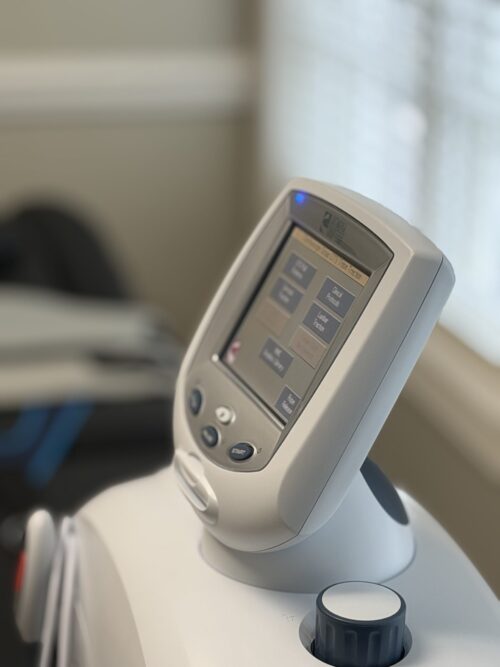
Older traction pulls the spine in one steady direction. The muscles often tighten up against it, which limits what reaches the disc. Our Chattanooga Triton DTS is a computer-controlled platform. It lets us set the angle, the force, and the rhythm of the pull for the specific level of the spine we are treating, and it ramps up and down smoothly so the muscles stay relaxed. That precision is the difference between stretching your back in general and working on one disc on purpose.
Who decompression may help
Decompression is designed for selected spine problems that have not settled with rest, basic chiropractic care, rehab, or medication. Those include:
- A herniated or bulging disc in the low back, especially with sciatica or pain down the leg.
- A herniated or bulging disc in the neck, especially with pain, tingling, or weakness down the arm.
- Some cases of spinal stenosis, where the legs feel heavy or achy on walks and ease when you sit.
- Long-standing facet joint pain in the low back or neck.
- Chronic back or neck pain from a mechanical cause that basic care has not fixed.
Research on decompression for disc-related leg and arm pain is encouraging, and results tend to be best in long-standing cases where simpler care has stalled. Evidence for stenosis is earlier and more mixed, so we recommend it there only for selected cases. Not every back problem is a disc problem. Muscle strains, hip-driven pain, and many fresh injuries are better served by other tools, and your exam sorts that out.
How decompression fits your plan
Decompression is one part of a plan, not the plan. In the first phase of the Cardinal Process, when we are working to calm the pain, a typical visit pairs decompression with your chiropractic adjustment when your exam supports it, a few minutes of coached exercise, and often K Laser to help calm irritated tissue. Dry needling may be added for tight muscles around the spine and hips.
Then the plan shifts to rebuilding. Core and hip strength, better habits for sitting, bending, and lifting, and a home program, so your spine holds the progress once the table work is done. For some people with worn spines, these pieces come together inside our Non Surgical Joint Replacement program, a structured care plan that may help some people delay or avoid surgery. It is not a substitute for surgery that is medically necessary.
What a session feels like
- Time: about 10 minutes on the table. Plan on 25 to 30 minutes for the full visit with your adjustment and exercises, and about 30 if K Laser is added.
- Feel: a slow, mild stretch that comes and goes. Many people find it relaxing, and some doze off. We adjust the settings to your comfort as we go.
- After: most people go straight back to work or their day. On treatment days we suggest short walks, extra water, and skipping heavy lifting or twisting so the disc has the best chance to settle.
How long a plan runs
A typical plan is two to three visits a week for four to eight weeks. Some people notice less leg or arm pain, or an easier time sitting and standing, within the first few visits. The more meaningful change usually builds across the series, and many people keep improving for a few weeks after it ends as the disc and nerve continue to settle. Disc healing is gradual, and every case moves at its own pace. We re-check your progress along the way rather than locking you into more than you need.
Who should not have decompression
We screen every patient before the first session. Decompression is not right for everyone, including people with:
- New or worsening weakness, numbness in the groin, or bladder or bowel changes (these need emergency care)
- A recent spine fracture, an unstable spine, an active spinal infection, or a tumor in the spine
- Severe osteoporosis
- Pregnancy, when treating the low back
- An aortic aneurysm, or severe circulation problems in the area being treated
- Recent spine surgery or spinal hardware, unless your surgeon has cleared it
- Strong blood thinners that your prescribing doctor has not reviewed
If decompression is not right for you, we will tell you and look at other options.
What it costs
| Option | Decompression | Decompression with K Laser |
|---|---|---|
| Single visit | $75 | $120 |
| 6 Pack | $420 | $660 |
| 12 Pack (the most common plan) | $780 | $1,260 |
Decompression is a cash service. That gives us time at each visit to position you correctly, set the table for your spine, and combine it with the rest of your care, instead of fitting the visit to what insurance will approve. Your chiropractic adjustment and rehab may still run through your insurance, depending on your plan.
Most people start with a single visit and move to a package once they feel how their body responds. Any prepaid visit you do not use is refunded. Your written plan shows every number before you start.
Decompression questions, answered
Does it hurt? Most people feel a slow, gentle stretch, and many find it relaxing. If anything feels off, we change the angle, the pull, or your position on the spot.
How is this different from a cortisone shot? Cortisone is designed to calm inflammation for a while, which can feel great, but it does not change the pressure on the disc. Decompression is designed to support the body’s own repair of the disc and nerve. For many people with stubborn disc pain, research supports trying a complete conservative plan first.
Is this a way to avoid surgery? For some people, a complete conservative plan may help delay or avoid surgery. We will not promise that. Surgery is sometimes the right answer, and if your exam or imaging points that way, we will tell you and help you find a surgeon.
Do I need an MRI? Not always. Many people who come in for decompression already have one, and we will go through it with you. If you do not and your exam suggests imaging would change the plan, we will recommend it.
Can it help my neck? Yes, for selected cases. The same table treats the neck with different settings, and neck plans usually pair decompression with chiropractic care, posture work, and upper back and shoulder strength.
How many sessions will I need? Most plans run two to three visits a week for four to eight weeks. Your diagnosis, how long the problem has been there, and how you respond all shape the plan. The 12 Pack fits most plans.
Is there downtime? No formal downtime. Most people go straight back to their day. On treatment days, keep it light on lifting and twisting.
I had back surgery a while ago. Can I still do this? Sometimes, with clearance from your surgeon. We will ask for that before we start.
Why is decompression not covered by insurance? Most insurance plans still treat computer-controlled decompression as elective, so it is a cash service here. The chiropractic and rehab parts of your visit may still be billed to insurance. Many people find a focused plan easier on the budget than months of copays, repeat injections, and missed work.
Can I just come in for the table? Decompression works best as one part of a plan, so we do not offer it on its own. Every plan starts with an exam to make sure it fits your case.
Is decompression for you?
Likely a good fit if:
- You have a disc problem in your back or neck, with or without pain down a leg or arm.
- It has lasted more than a few weeks, and rest, pills, therapy, or an injection have not held.
- You want a serious conservative plan before you consider surgery.
- You will do the home exercises that keep the progress.
Probably not the right clinic if:
- You want a table session with no exam and no plan.
- Your back just went out this week. Give it a couple of weeks, and call us if it lingers.
- You have new weakness, groin numbness, or bladder or bowel changes. Go to the emergency room.
- You are comparing per-visit prices to find the cheapest table in town.
We screen at the exam and will tell you if decompression is not the right tool.
Patients come to us from across Alamance County, including Graham, Mebane, Elon, and Gibsonville.
Online booking is open around the clock. You can also call 336-270-3050. 1710 Westbrook Ave, Burlington, NC 27215.